

Remember when technology actually seemed to provide us with solutions to our daily struggles? Remedies to pain points we’d long sought answers for? Yet lately it’s felt like Big Tech and the Vulture Capital™ backed startup sector has been focused on hawking fixes to issues that are inherent to the human experience. All at the expense of our wallets, and the planet itself.
I want to do a little thought exercise here. Now, this is something that may only work for anyone in the age range of “young adult and above”, but kids feel free to play along. Cast your mind back a few years. How far? Let’s say 5-10 years. In fact, let’s make it a solid 10-year time trip. Do you remember where you were? What your life was like? What technology did you run with? What were your daily drivers?
Focus on some of those indispensable tools that you used. Could be your phone. An in-car GPS. Maybe a social network you checked far too often. A gadget, a gizmo, whatever. Just keep them in your mind for now. Now let’s go back another 10 years. Same deal as before, reflect on those items, those tools, those services, which were part of your everyday life. Got them in mind? Good.
Now, I want you to recall what it was like before you had those technologies. How much more frustration and friction did their absence bring to your daily lived experience. For me, not having GPS was a pain. I knew some set routes in the car pretty well, but as someone who is directionally challenged, even a slight deviation when looking for parking would wreck my ability to navigate back home. I’d end up driving in the wrong direction for lengthy amounts of time until I came across a road name I was familiar with, then I’d hop on to that and pray it intersected with another known road so that I could slowly get my bearings. All the lost time, wasted fuel, anxiety and frustration was only slightly offset by the fact that I learned maybe a handful of new routes during that period of my life.
GPS changed my life
When I got my hands on my first GPS system some twenty years ago, my life radically changed. I became more adventurous, more confident in my ability to chart a path. I slowly learned better routes, time-saving alternatives and would even mark out points of interest to come back to. I’d no longer need to pull over and thumb through the bulky Melways street directory that lived under my car seat. I discovered a sprawling and complex network of nature reserves, walking tracks and landmarks that I’ve frequently added to in the years since. And after a period of time I also learned to ween myself from any sort of overreliance on the GPS system, training myself to commit many of these routes to memory. Young me would be proud to see that sometimes I’d even unexpectantly notice a familiar road name during my travels, only this time there would be no anxiety associated with that discovery, instead replaced with subtle delight as I weaved together the road network in my mind.
Ironically, some of my proudest moments are when I’d hop into a car with someone and could confidently tell them we didn’t need to use their GPS, because I knew the way to our destination from memory. These days I no longer worry about how I am going to get somewhere or if I will get lost. Maybe that all sounds like a bland experience to you, but I am forever grateful for that technology.
Then there are other benefits that I also never considered, like being able to know the speed limit at all times – especially valuable when you are in unfamiliar territory. In fact, when I briefly lived in Sydney I would drive around with my GPS on at all times, because I had heard horror stories about how deceptive their roads could be (it’s true, the place is built like someone assembling the Mouse Trap board game minus the instruction manual). They would also sneakily place speed cameras not just at traffic lights and intersections, but in the middle of the road, tucked away around corners, hidden beneath underpasses and a bunch of other locations that you could easily miss. It always felt like a cheap and unfair revenue boost at the expense of inexperienced travellers, and less a way to enforce speed limits. With my solution in place, I’d smile each time the GPS would ding and alert me to a “speed point”, which ironically made me an even safer driver, as I would then reflexively check how fast I was traveling. Ninety percent of the time I was under the limit, but occasionally I’d be 2-5KM over. That’s enough for a several hundred dollar fine and a few demerit points, and you’d be talking to a wall if you attempted to plead your case that you just didn’t know any better at the time. Thanks to GPS, I never had to.
Have you been wowed lately?
Beyond GPS, there are plenty of other technologies I can think back to which truly improved my quality of life. The mobile phone, health-trackers, VoIP/video calls and much more. If you’ve played along, I am sure you would have a few in mind as well. But if we bring that timeframe forward, it feels as though there are less and less examples of life-enhancing technologies that can be pointed at. Instead, and I don’t think I’m along in saying this, the market has shifted to an endless parade of sequels attempting to recapture that initial magic. Thinking back to the GPS example, it went from a standalone unit you’d purchase, to being built into your vehicle’s dashboard, to being an app on your phone and integrated into wearable devices. Cool, but apart from the form factor, what else has changed? Traffic mapping, route planning, points of interest and speed trap detection have all been available since the early days, including my first GPS unit, a chunky handheld TomTom with a teeny 3-inch screen.
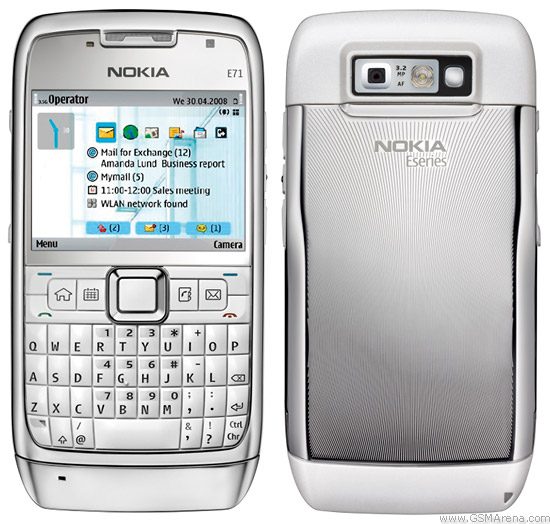
Little progression there. In fact, in some cases we’ve gone backwards. My Nokia e51 from the early 2000s had not only downloadable guidance voices including Yoda and a “surfer” character who would prank you by giving out the wrong directions (“wait… is it left, or right?”) and encouraging speeding (“dude, we’re entering the motorway, let’r rip bro!”), but also allowed you to record your own directions. A way to immortalise yourself, that is if you love the sound of your own voice. After experimenting with this feature, I concluded that I’d rather not take directions from myself.
Recently I was playing around with my modern-day Garmin GPS unit, and by accident triggered a developer mode, which opened up a slew of unforeseen options and hidden functionality, including its ability to track the path of the moon relative to satellite position, showing me the position of all nearby satellites in the closest cluster and a weird note-taking app where I could draw onscreen with my fingers. Strange, potentially useless, but it gave me that little twinge of excitement I used to feel, back when technological advancements seemed to mean something.
And that really sums up the first part of my thesis. Tech these days just feels like a cash grab, something intended to extract value from consumers instead of actually improving the quality of their lives.
Can you recall the last time a piece of technology truly made a difference in your day-to-day? I’m not talking about the LED strip you bought for your TV, a blue-backed phone that replaces a red-backed phone, purchasing a slightly faster computer or moving from a 26MP camera to a 26.1MP camera. Spec bumps and trivial objects are not what we are focusing on here. What’s something that you could not live without, or would significantly add frustration to your life should it be removed? What would you long for, if it was absent? And how long ago was it made, when was that technology made available to mass market consumers?
This is also a good exercise in reflecting on how much money we’ve collectively wasted thanks to marketing, FOMO and trying to fill voids through consumerism. And I don’t want to derail this piece by focusing on what happens to the tech we are needlessly replacing. That’s a story for another day.
Manufacturing a hit
So, with technological advancements slowing down and stagnation setting in, The Tech Profits™ realised that they were running and of problems to solve. That meant revenue would start to take a hit, if they themselves couldn’t find their next “hit”. And if they didn’t move quickly, the public might even realise that they would be just fine without the need to continually purchase the never-ending stream of shiny things they were being sold. Big Tech had already played their card in terms of focusing on shrinking form factors as their major strategy play… what was left?
Enter, Artificial “Intelligence”.
By applying this secret sauce to products and services, they could spice up anything! Heck, they could even re-sell the same old stuff, just by simply adding “AI” to the packaging. But let’s not stop there.
- Jack up the price? You bet!
- Paywalls and subscriptions? Let’s do it!
- Using “AI” as a catchall term to actually describe non-“AI” features? Why not!
- Stuffing products full of counterintuitive and inaccurate chatbots? Done!
- A vague promise of actually useful features? Coming soon!
- Auto-opt in and stealing user’s data for training and marketing purposes? Nice!
Alas, we find ourselves in the situation where companies are chasing their next big hit, and in doing so have been shoving their latest gimmicks (“AI” the prime example) into an increasing number of products and services, whether you like it or not.
Case in point – I opened up Notepad on my computer the other day to quickly edit a line of code and noticed there was now an “AI” CoPilot button. Why? What do I need that for? How do I opt out?
Apparently this functionality will help to re-compose the text you have written in a different tone and make your text shorter or longer if needed. Cool. First off, this is f*cking Notepad. I am not writing an epic tale here. And secondly, how am I meant to get better at writing if I outsource my cognition to this? No thanks. I’ve already blocked CoPilot at several levels of this OS, and now you’ve made me go ahead and uninstall Notepad. The more you push these unwanted features, the more I look to speed up my “transition to Linux and never look back” project that I have earmarked for later this year.
Okay, rant over. But probably not for long.
The real pain of it all is not the fact that, in my instance at least, I don’t like useless, environmentally destroying, unethical technologies being shoved down my throat to help line the pockets of Big Tech leaders. No, it’s that for many of us, we value our agency, talents, skills and love of the craft.
Now, I figure if you’ve made it this far in, you probably enjoy reading what I am putting out into the world, or at least this article. And truth be told, whilst I may not be the most skilled writer around, I actually really enjoy writing. I love learning new ways of expressing myself and slowly improving over time. But, I don’t get that way by “brainstorming via AI” or “AI prompts” or “AI re-writes” or anything like that. I use my brain. I flex that muscle and put it under tension. It improves as a result. You learn by doing, not by taking the easy way out.
I value teachers and learning opportunities more than ever-present assistants who will do your work at the click of a button. One helps you get better, the other helps you get sloppy.
In that same way, we are being told that “AI” is a godsend for everyone, when really, it’s likely being proclaimed as such by people who don’t value what it is attempting to automate. If you aren’t a creative, and not everyone is, then you likely don’t care to write, draw, make music, paint a picture or use your brain in that manner. Dynamic thinking and problem solving probably isn’t for you. And oh wow, gee wizz, now you can push a button and not have to think about doing that.
The problem(s) is that not everyone wants to devalue that experience. Not everyone wants the easy way out. Not everyone wants to rely on Big Tech for the answer to everything, forsaking their capacity to think, reason and create. And on top of that, you’re being told that this is the best solution for you, so you can get back to doing what matters… as long as that doesn’t involve monetising your skills, talents and effort. Big Tech isn’t relying on the slow-burn of “AI” to take hold, for grass-roots uptake to reach a critical mass and widespread adoption to occur. Instead, they are pushing this stuff on us at a relentless pace.
And that’s because they are betting on “AI” to be their next big hyper-growth market. They have no choice. Because they have nothing left to scale. Again, a story for another day.
Realise the play: they are trying to create synthetic adoption of a useless technology to line their pockets.
The good news is that the clock is ticking, and the winds of change are in full effect. Few, if any, of these “AI” companies are profitable. Each transaction, token and prompt costs the companies far more than they are raking in from subscriptions or other associated revenue streams, sometimes at a ratio of 3:1. And with each new model they announce, the compute costs and required resources continues to balloon, and without continuous fundraising many of the leading companies in this space would simply cease to exist. Oops.
You’re broken: The new grift
But, whilst we await this hype-bubble to inevitably pop, there is another sinister marketing push at work, designed to gaslight you into believing that you are fundamentally broken. I’m talking about the latest crop of “AI” products which are meant to provide solutions to those pesky human problems we all face. No, I’m not talking about something like navigation, but rather, your memory.
Products like Microsoft’s Recall, which aims to take continuous snapshots of your PC activity, index it, and then allow you to contextually review those snaps to find documents and other files through a timeline search, are nothing short of a privacy nightmare. So much so, they’ve already had to cancel their planned rollout of this feature at least once.
That’s fine, I hear you say, I don’t use Windows. Or, I do use Windows, but I’ll just opt-out and all is good in the world. Right?
…right?
Consider this. What if I am using Windows, and I have Recall enabled. And you and I are working on something together, a project that involves confidential information, private data, whatever. Now, let’s say you are on a Mac, or maybe using Linux, or otherwise don’t utilise or have access to this Recall feature. What happens when you send me that private data? What happens when you send an email to me, and I open it on my PC, which is screenshotting everything, at all times. What happens if someone get a hold of my machine, hacks it, or somehow compromises the integrity or security of it to some degree?
An even simpler example: What if we are on video call together? Hell… what if I view a picture of you on my computer?
Even though you may have opted to not use this feature, you are now subject to it.
All this because Microsoft believes we desperately need the capacity to remember everything, all of our computer-based activities, for future reference. That we can’t be trusted to rely on our own systems and processes, our own digital hygiene, and that they need to step in to “fix” this for us.
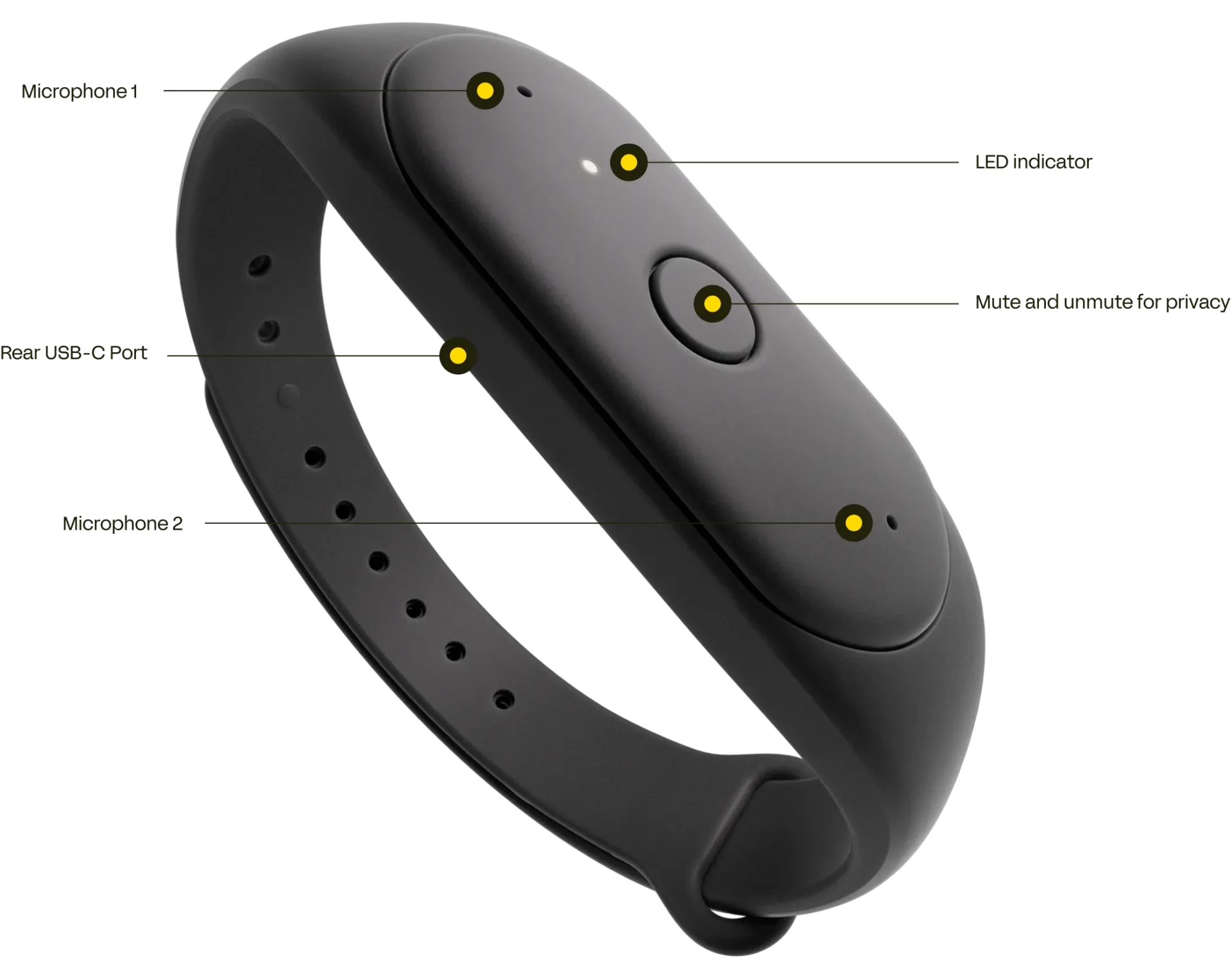
Then there are products like the Bee – a wearable device that records not only your voice, but the audio of your surrounding environment, to help summarise your daily goings on and act as a digital timeline of sorts. I recommend you read this hilarious and at times highly dystopian review of this useless product.
As you can imagine, the privacy violations are off the charts. And that was demonstrated by the reviewer who made a conscious effort to mitigate this issue. It’s easy to imagine that not everyone will adhere to that same level of care. It’s just like the Recall situation, but the potential privacy issues extend beyond your computer use. Someone could be recording your voice whilst you are sitting on a park bench, eating your lunch. What if you walk by someone who is actively recording, and blurt out some sensitive information? Where does that data go? How will it be used? And no, that isn’t a conspiracy theory or my imagination running wild. Selling a product like this for $50USD does make you question just how they will recoup the relatively low-cost of entry, especially when you consider they are producing actual hardware and ongoing software maintenance. It’s likely your data will be monetised in some way to offset that cost to the company.
And besides, do we actually need these sorts of products? Do we want to remember everything, at all times? Or pull up every single memory, in fine-grain detail, at the click of a button? That is, if these products do what they say, and don’t interject any false positives, which, going back to the Bee review, is very much the case.
Do you want to have a bunch of data stored on your PC from a former client who is no longer in your good graces? What about voice recordings of an ex-partner? Would either of them like you to have that information at hand, let alone on repeat? How can you hope to heal from any potential negative events or life outcomes if you can, at a moment’s notice, relive those experiences over and over again? Tom Cruise’s drug-addicted, trauma-replaying character in Minority report springs to mind. Or what about that Black Mirror episode where characters are driven to the brink of paranoia thanks to their always recording optical implants, leading to huge interpersonal conflicts as they overanalysed everything?
We are meant to forget. We are meant to get confused. We are meant to create.
And we are meant to learn from these experiences.
It’s time to tell companies that are trying to profit off your humanity to get lost.
Talking about something we shouldn’t forget, how about we shift our attention to the real issues we are facing, like climate change? Try putting your time, money and attention behind that. Because the upsides to solving that are endless. And no, I don’t need to ask ChatGPT for the answer to that one.